The Storm That Wasn’t

It’s 5am and I just glanced outside to see no frost on the windshield. Nothing unusual there, except I had been promised a snow storm.
Last Tuesday we sold out of ice melt, and the entire rest of the week we had people calling in, asking about ice melt. We were sold out, so was every store in the area. And they kept calling. At least no one got mad about it.

Though we did get a little ice. Just nothing to panic over.

So often we have these moments when anticipation builds up, only for nothing to manifest. A promotion we didn’t get. The school bully that didn’t show up that day. A meal that didn’t quite pan out the way we planned. A date that leaves you feeling a bit

Do we use that disappointment to push harder? Do we feel relief? Is it a help or a hinderance?

For me, this morning, it means an extra 20 minutes I can wait before going outside because I don’t have to defrost my car.

What are you anticipating this morning?

Greenland

Poking around in X today I came across a video showing a plane taking off from a snowy field, and a caption:

ALERT: In a bombshell revelation, top White House officials disclosed that the United States is finalizing a staggering $700 billion cash offer to buy Greenland outright from Denmark, plus $100,000 lump-sum payments to each of its ~57,000 residents—totaling nearly $706 billion.

Greenland airport

Of course this is only an offer, it hasn’t been accepted. We don’t know if it will be.

And why is it so important to Trump that the USA acquires Greenland? Military bases, the northern passage, and minerals among other things.

From Grok:

“Greenland is the world’s largest island, strategically vital in the Arctic for military bases like the US’s Thule Air Base. It’s rich in rare earth minerals and potential oil/gas reserves. Amid climate change, its melting ice sheet affects sea levels and opens new shipping routes. Geopolitically, it’s key for countering influence from powers like China and Russia.”

But what got me wasn’t the acquisition offer itself. That’s normal. That’s business. Someone has something you want, you offer to buy it. And one country buying another isn’t unusual, it’s happened before.

I really stood out were the conments under the post.

“100k for Greenland citizens and we only get $2k?” seemed to be the loudest complaint.

Not “we are buying a country” but “when do I get mine?”

It’s in human nature I suppose, to seek out something to benifits us, but there is a distinct devide between those who look for long term gains, versus those who go for short term gains.

I asked Grok what acquiring Greenland would do for the average American :

“Acquiring Greenland could offer average Americans indirect benefits like enhanced national security through Arctic dominance, access to rare earth minerals reducing tech costs, potential job growth in mining and research, and better climate data for global warming strategies. However, direct everyday impacts might be minimal, with costs potentially outweighing immediate gains.”

Long term saftey versus that 100k price tag? It doesn’t stand a chance for many people these days.

This is a problem in modern society. The reason we laid highways across the USA, fiber optics, train tracks…. All of it stemmed from people who saw the future growth of society. Not just what they could get right then.

It also limits a person in their own life, as well as the lives of their children. If they cannot see beyond the short term gains then what legacy can they grow for their family?

Should we buy Greenland? Possibly. For security and military purposes it seems strategic. And I prefer buying a country over invasion like Russia has done.

I don’t know… What do you think about this?

Hytale!

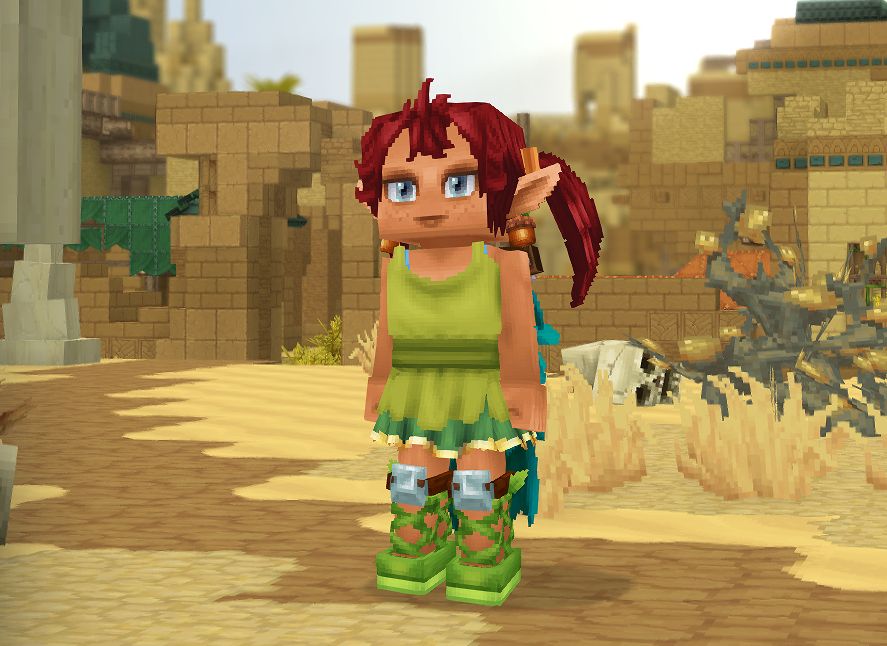
I’m sure I’m not the only one that’s been waiting for Hytale for some time. And now, after years of developer limbo, it’s out!

My Hytale character.

There are tons of people talking about the purchase by Riot, the cancelation of the game, and Simon buying it back. It’s one heck of a comeback tale. But I think there’s something else to learn about this story.

First, going with a larger publisher isn’t always the best option. Sure, Riot sunk lots of money into Hytale with the desire to make it cross platform and perfect at launch. But ultimately ask if that work was discarded and they went back to the original build.

For publishing you can try the major publishers, and some people have great luck with them. But it’s easier than ever to go out alone, or go through smaller publishers. Getting the right size publisher, and knowing what they plan to do with your work, is important.

Second, bad news might be used in your favor.

The cancelation of Hytale shoved it back into the conversation, and showed just how much everyone wanted to play it still. That gave them the opportunity to buy the game back and sell a couple million copies up front.

Use opportunities to drum up conversations. Cover made? Issues with printing? Stuck on a chapter? In the flow of things and finished five chapters in one day?

If you can find any reason, good or bad, to talk about your work… Use it!

Also if you like survival building fans go get Hytale! It’s awesome!

Review: Beetlejuice Beetlejuice 2 (no spoilers)

Last night we took a chance on Beetlejuice 2. Both my significant other and I had grown up watching the movie, and the cartoon for Beetlejuice, so of course we were interested in a new feature film. However, knowing films these days, we went in with low expectations so that we couldn’t be disappointed.

Did we like it? Well…. it was… okay.

And I suppose that is the best we could expect from some films these days. Okay. It didn’t have any terrible plot elements, it didn’t reference modern society, or make commentary on politics. It was just a film about a mom and her daughter in a world full of ghosts.

But it wasn’t great either. The film felt like it had three plotlines running through it, and the plotlines were at odds with each other instead of complimenting each other. The advertisements all were so keen on Beetlejuice’s ex-wife, but she was only in about five minutes of the movie so when it came to the conclusion it felt… hallow and forced.

The plot around Lydia and her daughter, Astrid, was far more interesting, and had more chances for hijinks. Instead it felt like it was cut short in favor of showcasing the waiting room with all the weirdly dead people in it over and over again, or having brief scenes with the actor turned police chief ghost played by William Defoe.

It had good elements, funny scenes, interesting background characters that dressed the scenes nicely… it just didn’t have a full plotline that felt really satisfying. So it ended up being… okay. Not great, not horrible, just… okay.

So if you just want to get out for a night and spend some time at the theater, it’s okay.

Your Friendly Neighborhood Therapist

“Go to therapy.”

I’ve heard it a lot, and at times I’ve considered it, but there is one thing about the whole situation that bothers me. That is the fact that there used to be someone you could talk to about your problems, tell your secrets to, and trust to have your back. That person was called a friend.

Now we live in a society where telling your friends about your problems is “trauma dumping”. No one wants to hear about your boyfriend breaking up with you, or that you’re lonely, or heaven forbid you lost your job and you just need someone to commiserate over a cup of coffee with you.

This has lead to, in my opinion, incredibly shallow friendships. I don’t know what’s bothering my friends because they don’t talk to me about their troubles. They don’t know about mine because I don’t want them to stop talking to me because I’m “trauma dumping.” Instead I end up just…staying to myself most of the time. Not because I’m depressed, in fact I’m happier than I’ve been in an incredibly long time. I just know that I don’t particularly care to invest in a “friendship” that is as shallow as a summer pond evaporating in the sunlight. As soon as something comes along to really shine a light on that “friendship”… it’s going to be gone.

Don’t get me wrong, I do think therapy is useful to a lot of people with real problems. OCD, phobias, PTSD induced by something horrible happening in the past. All of them and more could be helped with some good old fashioned cognitive-behavior therapy. It’s been shown to work, and lesson symptoms if not completely cure it. But the majority of people who go to therapy aren’t going for major issues… they are going because they just need a real friend.

Instead of friends we pay someone to listen to us talk about what’s bothering us. Instead of reaching out to others around us we are scared, lonely, and maybe even a little self obsorbed.

Honestly… I found the easiest way to cure my loneliness wasn’t to pay someone so I could talk to them about it, rather it was to reach out to others and talk to them about their life, and hope they would want to talk about mine. Because that’s the other thing missing from a lot of relationships these days… the basic give and take of a true friendship. The mutual interest in each other.

Once, a long time ago, someone sent me the book “How to Win Friends and Influence People”. They said it would help me with my goal of getting more friends. I didn’t find it helpful at all because it advocated for you to just let others talk about themselves, always, and never really share a part of you. People like to talk about themselves, it said, and the book is absolutely right about that. But this leaves you with a one sided relationship as you learn everything about those you want to influence and they learn nothing about you.

It’s a marketing tactic, one that clearly works very well. But it doesn’t create the long lasting and deep relationships that I wanted. It doesn’t foster understanding between two people, or let you know that if something bad happens that person has your back.

Instead we are left with that cheerful fellow that always asked me questions, and was a good listener…but I didn’t really know much about him, and I probably wouldn’t invite him for more than an afternoon cup of tea. And if my car broke down I wouldn’t call him for a ride.

Some people are absolutely fine with these shallow, superficial relationships. They might have a few closer friends and enjoy the casual passage of time with others. But I suspect there are a great many people out there like me who want something more fulfilling. Someone who actually cares, and knows more about you than the average person out there. I suspect a great many people pay a therapist to listen to them because they feel that missing relationship of a friend who has their back.

And sure, a significant other absolutely fills that space, but it isn’t very healthy to have only one outlet for interpersonal communication. Sometimes you need that friend to go have coffee and chit chat with. Sometimes you want to go play pool with the boys. It’s actually better for a relationship if you do spend time with other people sometimes.

Regardless, I feel like this over reliance on therapy, and lack of deep friendships, is just another sign of a low trust society. We aren’t able to really let others in because we don’t trust them. They might use what we say against us, they might get us canceled, they might turn us into some authority, or get us fired. And for a lot of us if we get burned too many times it’s hard to kindle that fire again.

I don’t know what the answer is. I just know that I still try to reach out to others, to listen to their stories, and share mine with them. To be just a little vulnerable, and hope they reciprocate. In the end…that’s all we can do. Put ourselves out there and try again.

Clearing the Kindle 6: – What did I just read? (Feels like AI?)

Book read: Zombie 69 by Kitty Glitter
Pages: 20

Sometimes you read a book and you wonder… What did I just read?

That is how I felt after just a few pages of Zombie 69. This short twenty page book contains two short stories, the first about zombies and the second about a cat and dog that live with some humans. Neither story makes any sort of sense. They both feel meandering, and broken, almost as if it was written by a primitive AI generator, not a person.

I don’t remember the zombie story very well. It had to do with zombies going to high school (why?) and doing ordinary teen things, they are just zombies that have to pop their eye back into socket now and then.

The second story was…weird. The cat and dog can talk to each other, and they swear a lot. Some random person breaks into their house and kidnaps their child, then the dog goes a little savage and blames the cat. The cat, for it’s part, starts talking about time shifts, and the girl being pushed out of time. Then it just ends. The girl is still gone, there is no explanation of time shifts, there is no explanation of why the cat is able to drive an RC car, or who that guy that kidnapped the girl was. It just ends.

This clipped, piecemeal story telling gave both stories a generated feel. It felt almost like it was using some sort of madlib format. (I am not saying it is, of course, I can’t know that. But the feeling is there.)

This chaotic structure is often how people recognize AI generated art. The AI can combine aspects of different pictures, and even blend them together, but it often gets anatomy or structures wrong. It adds extra fingers, or one eye is much bigger than the other. It becomes incredibly obvious that whatever created the artwork, be it human or program, it has an uncanny valley feel. It seems like it should be art, or human, but it just feels… wrong. And sometimes we aren’t even able to tell what is wrong about it, just that there is something that doesn’t work.

In written work it’s much the same. Algorithms are pulling from sources all over the internet and smashing them together, but it’s a predictive text structure. Just like the predictive text on your phone doesn’t always suggest the right word for that sentence you’re writing, ChatGPT sometimes adds whole paragraphs that just restate what it already said, or breaks structure, or leaves out key details. When dealing with factual information it may even just be flat wrong as it pulls from the wrong information online. Remember, a predictive text formula is only as good as the information being fed into it, and a LOT of the information on-line is just wrong. How could a language model be expected to be right all of the time?

I don’t know if this particular story was written by an algorithm, or just some random stories built from the authors wildest dreams, but the feeling is the same. It doesn’t feel…cohesive, or right. And it makes zero sense.

How would you fix the very structure of your story telling? My suggestion is to have beta readers, or a writers workshop. Being part of a writers workshop and having honest feedback about my writing helped me get the words right faster than just spitting words into a void and hoping they made sense. And with the age of the internet with facebook, forums, meet-ups and more, finding a group of people dedicated to helping each other get better at writing is easier than ever. It can be on-line so that you don’t have to put faces to the criticism, or you can opt for in person where you can get better at people skills, too. Either way, having good feedback about your work is crucial to not just finding your voice, but refining it.

As for AI…There are arguments for and against AI generation. I tend to be of the opinion that it’s a tool just like any other random plot generator and that if you, as the writer, don’t take that generated idea and actually write it yourself than it will never be a great story. AI just simply rewrites what has already been written. Good for ideas, for plot summaries, or settings, but not good for a finished product. Not yet, at least. (That’s a little spooky to think about, really.)

There’s a lot more to go into about AI generated art as a whole, including copyright, stolen assets and more, but that’s a much bigger topic than I may cover in a blog post. So for now we’re just going to take from this short story that if you don’t have a cohesive story that makes sense people might think you’re a computer. And if you want to get better at writing you might try a writers workshop.

Next story: Immortals by Eva Fairwald.

Clearing the Kindle 5: – Confused? Me too!

Book read: Breath for Me by Edward Robertson.
Pages: 17

When I downloaded “Breath for Me” onto my kindle I wasn’t sure exactly what to expect. I didn’t remember picking up the book, and the cover just had some palm trees and simple text across the front. (Though it does say “fantasy story” in very small cursive letters that I didn’t notice until writing this.)

What could a photo of palm trees in green and red tones be? I thought a literary fiction work, or just a fiction story set in a tropical location. Either way I wasn’t expecting a group of slaves building an aqueduct in the middle of a jungle. And I certainly wasn’t expecting the main character to have the ability to make illusions with his magic breath.

Setting the cover aside, I was interested in the setting. I haven’t read many books from a similar time period, so I continued on with the read.

The plot is simple. A man is working to build an aqueduct as a slave (perhaps an indentured servant as it is only for a specific amount of time). He starts sharing stories at night using his illusions to create plays for the other slaves. The overseer, wanting to wave around his authority because he hates his job, tells the main character to stop. MC warns him that a riot will break out, but complies. A riot breaks out and several people die. Then…everything gets confusing.

Before I continue I am going to admit that I am in the minority, it appears. Reading this work, I was incredibly confused at several points in the story. I re-read the ending three times and I still don’t know what exactly happened. The reviews seem to be more favorable. Some of this is clearly because the readers are familiar with Mr. Robertson’s work as they make reference to his other stories. But there are others who found it confusing, as I did.

I, as a new reader, do not have any idea how the magic in this world works. He breaths, and through his breath he can make illusions appear. I don’t know the limits, but the other slaves seem to imply the magic user should be able to build the aqueduct with a wave of his hand. Only the MC insists he isn’t a good magic user and the illusions are the best he can do.

So when mountain sized men in chains start across the sky…I was confused. I think the MC is showing everyone what happened, and how one of the slaves was killed, so that the other slaves would rally together and fight back against those in charge. But everything happens incredibly fast, with broken thoughts strung together, so it’s hard to follow. That, coupled with the fact that I’m unfamiliar with this writer, or his worlds, made the experience a confusing one.

So what did I learn from this short story? First, know your audience. Not only the audience you already have, but are you trying to reach new people with this story as well? Will someone who has never read your work understand what’s going on?

Second, less is not always more. This story was only 17 pages long but I think if the last two pages had been given a few more pages to grow it might have been less confusing. It would also have separated the epilogue from the main story a bit so that it felt like a distinct part instead of just a run on from the previous paragraph. In writing you have nothing to show the passage of time but your words, so use them.

And lastly…not everyone is going to like your work. There are plenty of people who like this story and give it five stars on amazon and goodreads. I won’t be one of them. I think I’d give it a three. That doesn’t mean the story isn’t good, it just means that it isn’t for me. This is important to keep in mind as a writer. You can not please everyone, no matter how hard you try. But also keep in mind if everyone is complaining about the same thing then you probably do need to reevaluate what you’re writing.

And sometimes the stories we like the least are the ones we can learn the most from.

Next story: Zombie 69 by Kitty Glitter (um… this should be interesting…)

Clearing the Kindle 4: – A name by any other name….

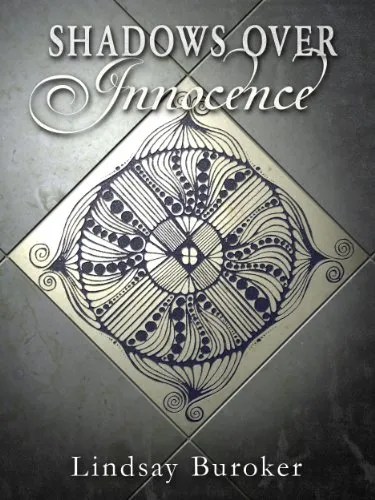
Book read: Shadows Over Innocence by Lindsay Buroker
Pages: 17

This weeks story is a short, but sweet, tale of an assassin watching over a the young heir to a kingdom. There is no softness, no joy in this assassin. All emotion has been beat out of him by the emperor that rules with an iron fist. But still…there’s something about the innocence of this young buy that gives the hardened assassin pause.

Overall the story was an enjoyable peak into this world that the author created. It’s hard, and viscous. It is a land where might makes right. But even in this world of hardness and pain there is one small point of light flickering in the darkness.

But even in a lovely tale like this we, as writers, can learn something.

For this story it was the naming convention. Lindsay Buroker went with names that were unusual, each with three to four syllables, and each unique enough that they might give some readers pause. Still, in fantasy worlds that isn’t unusual.

However, the main character and the heir have names that are very similar to each other. Sicarius and Sespian. This isn’t a hard and fast rule, of course, but one naming convention for story telling is to give characters distinct names so that they don’t get confused, and specifically starting with a different first letter.

While reading this particular story you are first introduced to Sespian, the assassin. He happens across Sicarius within few paragraphs. It is clear they are two separate people, of course, but in my head I kept getting the names mixed up as I was reading it. I had to take a minute to actively separate the two so that I could tell which was which. On the other hand the other named characters, Hallowcrest and Raumesys, had distinct names that were easy to keep straight.

While reading many of us do not take in the words syllable by syllable. We take them in as a whole. Maybe you have seen this puzzle floating about the internet:

Aoccdrnig to a rscheearch at Cmabrigde Uinervtisy, it deosn’t mttaer in waht oredr the ltteers in a wrod are, the olny iprmoetnt tihng is taht the frist and lsat ltteer be at the rghit pclae. The rset can be a toatl mses and you can sitll raed it wouthit porbelm. Tihs is bcuseae the huamn mnid deos not raed ervey lteter by istlef, but the wrod as a wlohe.

Most fluent English readers can decipher this fairly quickly. That is because we take in the words as a whole unit and our mind automatically translates it into the proper spelling. There is a little more to it, you can read more about that here, but in general if the first and last letters are correct than it is easy enough to get the gist of what is said.

Which brings us back to the two names with the same first letter. If you are taking in the name as a whole, not as individual syllables, it is easier to get them mixed up. Separating them with different beginning letters, especially when they appear quite close to each other in the text, helps to separate out the characters.

Such a simple thing, and yet it makes a big difference in writing.

Next up: Breath for Me by Edward Robertson.

Clearing the Kindle: 3 – Tell Me a Story

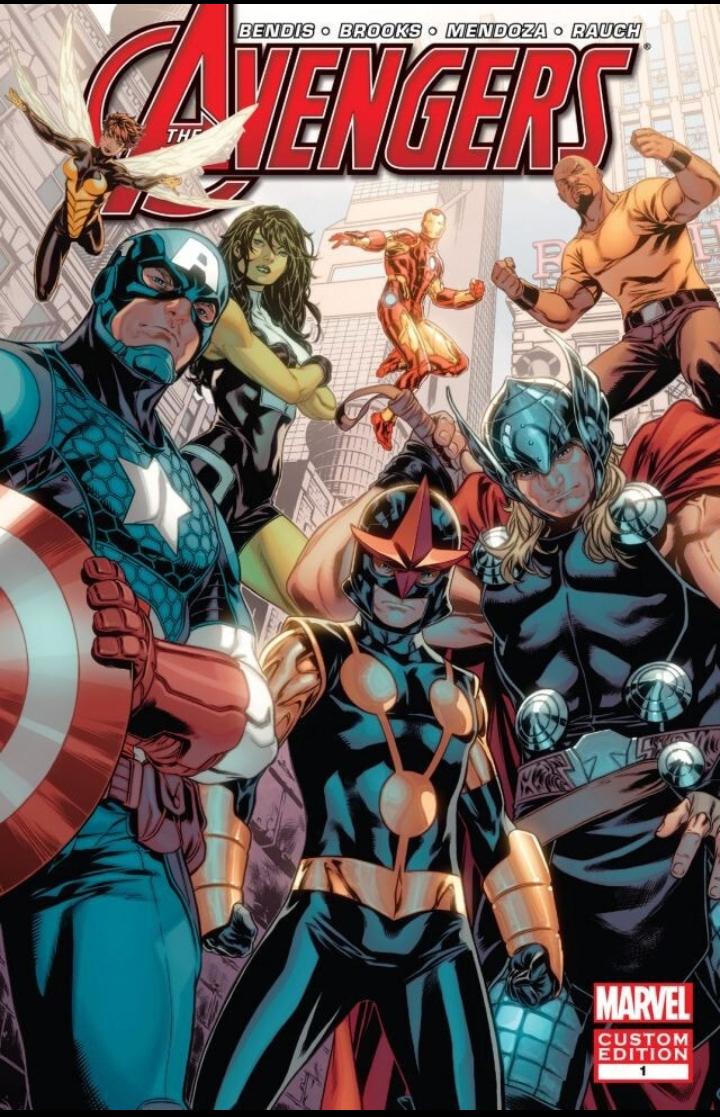
Book read: Avengers: Heroes Welcome
Author: Brian Michael Bendis
Pages: 14

What is one of the first things they taught you in English class? Or one of the lessons that stuck with you? For me it was always, ALWAYS, “Show! Don’t tell.” It was drilled into my young mind from the moment I could hold a pen. Show the story, show the characters, and the interactions, don’t just tell it to me.

Picture this: A dark trail, branches reaching high above, their naked fingers scratching at the velvet black sky. A lone figure stumbles down the path clutching at his leg, hot blood seeping from a wound. With heaving breaths, he sends quick glances back over his shoulder, but there’s nothing there.

Can you picture that? Can you feel his heart thumping, the fear in him as he tries to staunch the wound, the desperation as he searches the darkness?

Or I could say “A dude walks down a dark path with someone chasing behind him. He has a wound on his leg that’s bleeding.”

Which would you prefer to read? Which would keep you entertained?

The idea of “show don’t tell” is a hard lesson to learn, and I think one many writers never learn. I believe this even more after reading this weeks short story, or rather a comic. Avengers, Heroes Welcome, does so much telling, and zero showing. So much that it felt more like a sermon than a story.

First I will say… I really do love comic books. I’ve been reading and collecting them for decades now. My favorite has to be Escape from Wonderland, with Fable as a close second. But I also had quite a few Avenger, Thor, and Spiderman back in the day. So I’m not unfamiliar with how comics use panels, and short page counts, to get a story across.

A comic is an illustrated short story. It uses art, as well as dialog and limited narration, to show the action. Most comics (back in the day) had high action content. Catch the bad guy, or escape the serial killer, that sort of thing. But a good comic could get the story across between the pictures and dialog, with very little narration.

“Heroes Welcome,” on the other hand, has no action. No real story, just a bunch of people sitting around discussing what makes a hero.

This feels like the author wanted to tell people what they thought a hero was, and instead of writing a story to show a heroes actions they had Nova (a young hero I’ve honestly never heard of) barge into the Avengers headquarters, and start asking philosophical questions about what makes a hero.

Don’t get me wrong, it isn’t the first time a super hero had a case of consciousness and needed to figure out if they were doing the right thing. Spiderman goes through this frequently since his actions often cause the bad thing to happen, and his story revolves around taking responsibility for your abilities. But his questioning always happens while in the mist of action, and his actions or successes lead him to his answers.

Instead “Heroes Welcome” is literally just a bunch of people sitting around a room talking.

I was disappointed. The plight of the hero, and what is a hero, is the very substance of a super hero story. And yet they stripped away all vestiges of that to make it a boring classroom lecture.

And sadly they had the perfect opportunity to show exactly what a hero is. A rescue from a fire, and a heart touched. A single life saved, going on to be changed from then on.

This is something firefighters and police officers do daily. They could have used that example to show heroism, even in the face of a person who has no powers.

Instead we got a lecture.

Show. Don’t tell.

Next weeks book will be “Shadows over Innocence” by Lindsay Buroker.